
Livigno
Livigno Ski Holidays
Accommodation, Lift Pass, Ski Rental & Ski Lessons prices. Book all your ski extras on one website - Quick and easy. After booking, you will receive vouchers containing the information you need to collect ski passes, equipment rentals, or find your ski school meeting point. Please remember that if you book a ski pass, you must also book or have already booked accommodation or equipment rental with us. You can also call (0034) 649 144 719 directly to make a reservation
Livigno Overview
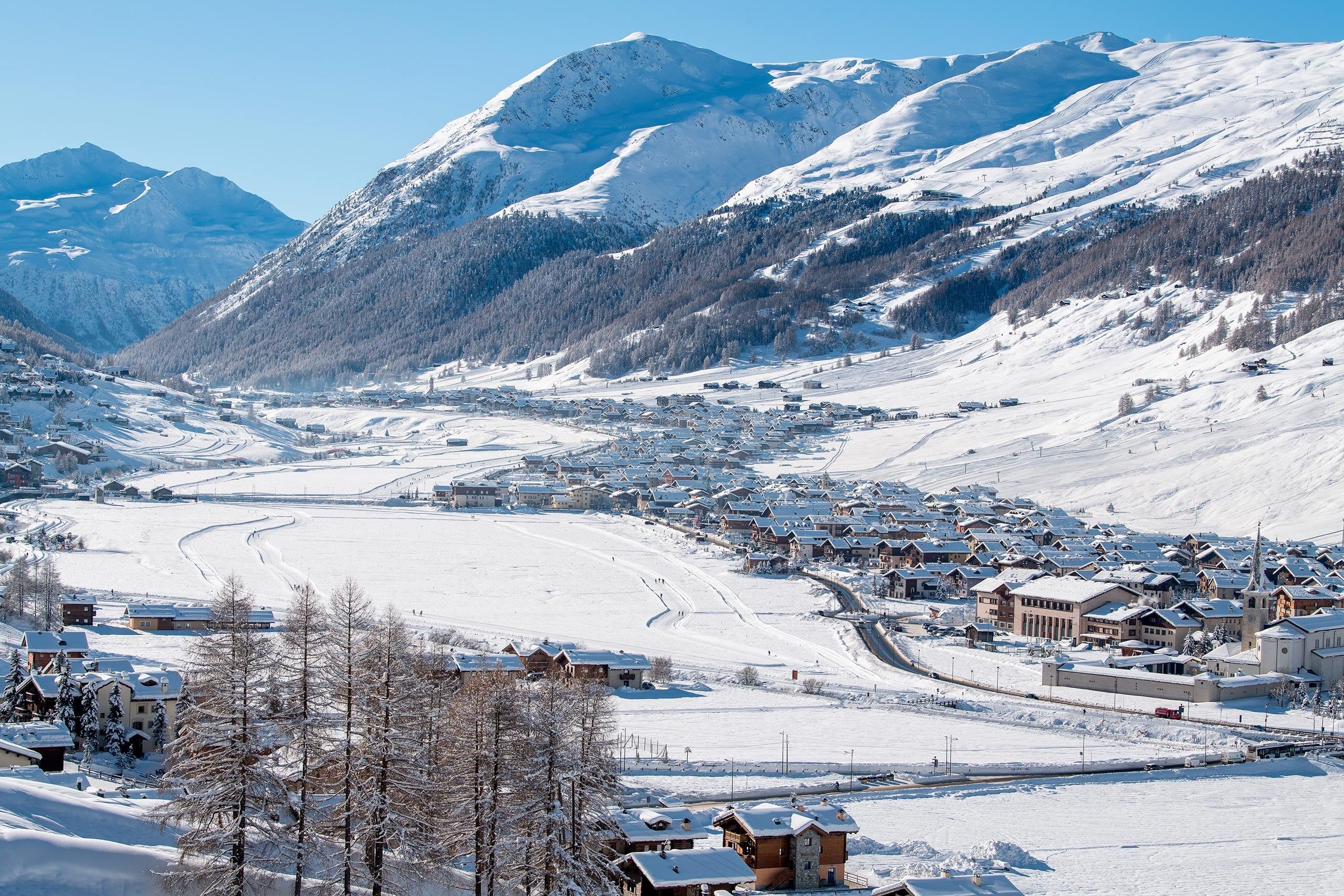
Tucked away in the Italian Alps close to the Swiss border, Livigno is one of the most distinctive ski resorts in northern Italy. Often associated with its nickname “Little Tibet”, the resort sits at approximately 1,816 metres above sea level in a broad, enclosed valley surrounded by impressive mountain peaks. Its combination of altitude, reliable winter conditions, extensive skiing and lively village atmosphere has made Livigno an established destination for skiers and snowboarders from across Europe.
The high elevation is one of Livigno’s defining characteristics. The ski area reaches towards 3,000 metres, while many of the pistes descend almost directly into the village. This creates an unusually convenient ski experience, with numerous hotels and apartments located close to the slopes and lifts. The official resort describes the area as offering a genuine ski-in, ski-out experience in many parts of the valley.
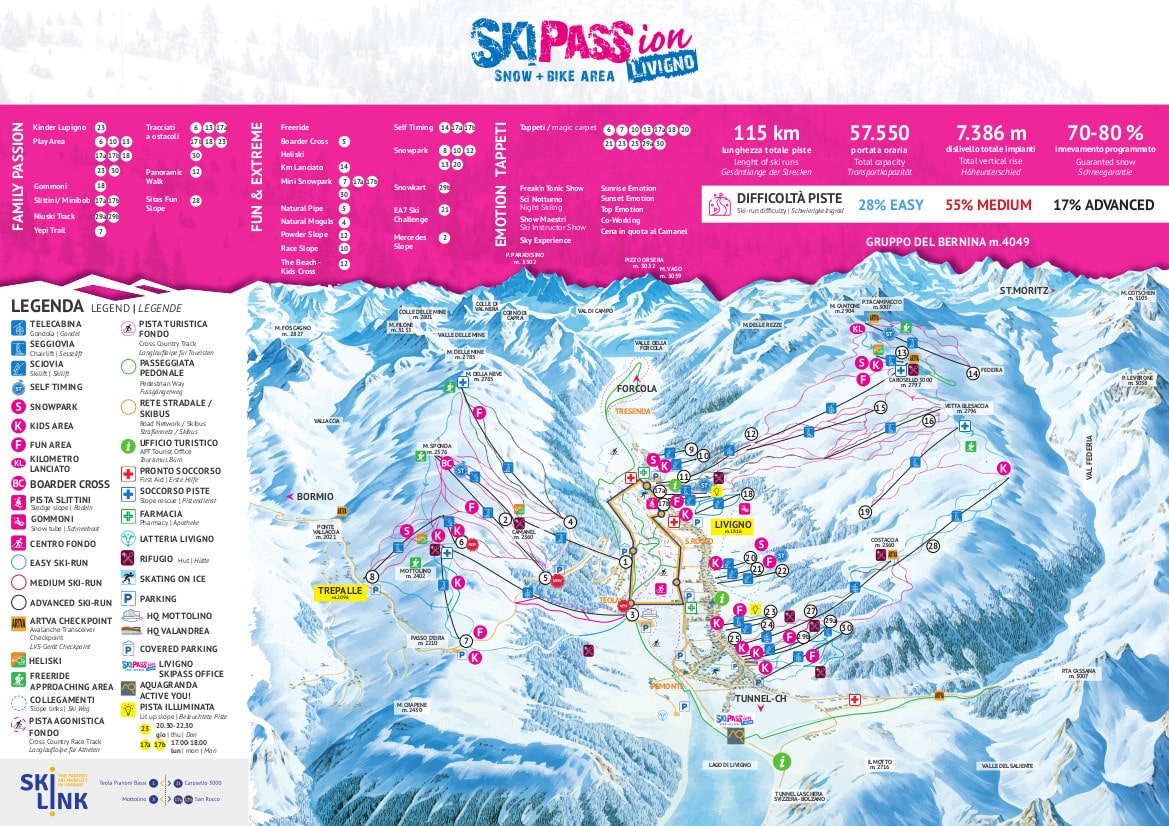
Livigno's ski terrain is spread across two principal sides of the valley, with the Carosello 3000, Mottolino and Sitas sectors providing access to a varied selection of pistes. The current ski area features around 115 kilometres of marked runs, with terrain ranging from easy blue pistes through to challenging black runs. There are also extensive opportunities for intermediate skiers, with red pistes making up a substantial proportion of the area's terrain.
For many visitors, the breadth and width of the pistes are among Livigno's greatest attractions. The slopes around Carosello 3000 are particularly well suited to cruising, with broad descents and expansive views across the valley. Mottolino provides another character entirely, with terrain that appeals to stronger skiers and snowboarders as well as a well-established freestyle scene. The variety means that groups with different abilities can enjoy the same resort without everyone having to follow the same routes.
One of Livigno's standout experiences is reaching the upper mountain around Carosello 3000, where the landscape becomes increasingly dramatic. From the higher lifts, skiers can look across a vast Alpine panorama before choosing long descents back towards the valley. The resort's current lift network includes modern gondolas, chairlifts and surface lifts, with recent investment continuing to improve access to the mountain.
Experienced skiers also have plenty to explore. Black runs are distributed across both sides of the ski area, while freeride terrain provides opportunities for those looking beyond groomed pistes. The Carosello 3000 sector includes areas where skiers can begin exploring off-piste techniques in a more controlled environment, while the surrounding mountains offer more serious terrain for appropriately equipped and experienced visitors.
Snowboarding and freestyle are another important part of Livigno's identity. The resort has developed a strong reputation for snow parks and action sports, attracting riders looking for jumps, rails and other features alongside traditional piste skiing. Mottolino in particular has long been associated with freestyle, contributing to Livigno's younger and more energetic image.
Despite its substantial ski area, Livigno retains the feel of a genuine mountain community rather than simply functioning as a purpose-built collection of ski accommodation. The long valley contains a mixture of traditional Alpine buildings, contemporary hotels, restaurants, cafés and shops. Visitors can move easily between the different parts of the resort, and many of the central areas are particularly convenient for reaching the slopes.
The village is also known for its lively atmosphere after skiing. There is a broad choice of restaurants and bars, ranging from relaxed mountain-style venues to more sophisticated dining options. Après-ski is an important part of the holiday experience, but Livigno also offers quieter alternatives for visitors who prefer an evening meal, a stroll through the village or time relaxing away from the slopes.
Another unusual feature of Livigno is its duty-free status, which has historical roots dating back centuries. The special customs arrangements have helped shape the resort's commercial character, with a substantial selection of shops lining the main streets. As a result, shopping can become part of the holiday experience rather than simply something to do when the weather turns bad.
Its sporting credentials received another major boost through the 2026 Winter Olympics, when Livigno was selected to host freestyle skiing and snowboarding competitions. This further reinforced the resort's reputation as a destination with strong links to modern winter sports.
Livigno Piste Map
Click the image to view a larger version.
Livigno Ski Information
Resort height - 1816 meters
Ski area -115 km
Cross country area - 30 km
Timed slalom slopes - 3
Snowparks - 4
Ski lifts - Gondolas - 6, Chairlifts - 14, Drag lifts - 12
Night time skiing: Every Thursday 20:30 to 22:30 (until mid March)
Hydrography: Lake Livigno tributary of the Danube
Beginner
Intermediate
Advanced
Snowboarding
Weather in Livigno, Italy Weather
Things to do in Livigno
Activities - Livigno offers plenty of ways to enjoy the mountains without putting on skis or a snowboard. Snowshoeing is a popular choice, allowing visitors to explore peaceful snow-covered trails and forests while taking in the scenery at a slower pace. Winter hiking and guided excursions provide another opportunity to discover the landscape away from the pistes. For something more adventurous, visitors can try dog sledding**, snowmobiling or even ice climbing. The resort also offers opportunities for ice skating, while families can enjoy activities such as sledging and dedicated snow-play areas. Livigno's spectacular surroundings can also be appreciated from above. A ride on the cable cars to the higher mountain areas provides panoramic views without requiring any skiing ability. Back in the village, visitors can relax at a spa or wellness centre, enjoy an Italian meal, or explore Livigno's shops and cafés. The resort's duty-free status makes shopping particularly popular, with a wide selection of stores along the main streets.
Restaurants - Eating out in Livigno is an important part of the ski-holiday experience. The high-altitude resort in Lombardy combines traditional Valtellina cuisine with contemporary Italian cooking, international influences and a growing fine-dining scene. From rustic mountain restaurants serving hearty local dishes to sophisticated restaurants recognised by the MICHELIN Guide, there is considerable variety for visitors looking to eat well during a winter stay. Local food is naturally at the heart of the experience. Livigno's cuisine reflects its location in the Alps and the traditions of the wider Valtellina valley. Visitors can expect dishes built around ingredients such as potatoes, cheese, buckwheat, game and locally produced meats. Pizzoccheri, the region's famous buckwheat pasta combined with cheese, potatoes and greens, is one of the dishes worth seeking out after a day on the slopes. Restaurants such as La Piöda specialise in rustic local cooking, with the official tourism listing highlighting pizzoccheri, game, porcini mushrooms and meat prepared on a hot stone. Traditional Alpine restaurants are particularly appealing during winter. Their warm interiors, wooden furnishings and mountain-style atmosphere provide a natural contrast to the cold and snow outside. Farmhouses and malghe, meanwhile, offer another opportunity to experience local food in a more rural setting. Livigno's tourism organisation specifically promotes these establishments as places where visitors can discover authentic mountain traditions and locally sourced ingredients. Pizza is also well represented, making Livigno an easy destination for families and groups with different tastes. Many restaurants combine pizza with broader Italian menus featuring pasta, meat and Mediterranean dishes. Ristorante Il Cenacolo, for example, describes its cuisine around Alpine specialities, meats, Mediterranean dishes and pizza. Livigno's restaurant scene extends considerably beyond traditional mountain cooking. The resort has developed a more sophisticated gastronomic identity in recent years, with contemporary chefs reinterpreting Alpine ingredients and techniques. The MICHELIN Guide currently lists several Livigno restaurants, including Ristorante Stua Noa Fine Dining, Ristorante Al Peršéf - Livigno, Kosmo Taste the Mountain, Camana Veglia and Téa del Kosmo. This gives visitors the opportunity to make dining a genuine part of their holiday rather than simply a practical necessity between days on the mountain. At the higher end of the market, menus can focus on creative interpretations of local ingredients, carefully presented courses and more elaborate dining experiences. The official tourism organisation notes that Livigno's fine-dining restaurants aim to combine Alpine traditions with contemporary culinary techniques. There is plenty of choice for visitors who want something different, too. Livigno has restaurants offering steak, seafood and sushi alongside its Italian and Alpine specialities. Ristorante Larice Sushi&Gourmet, for instance, combines sushi with Italian cuisine, while Bivio Cantina Lobster - Osteria del Mare represents a decidedly different approach with seafood-focused dining. The variety is useful for longer ski holidays when visitors may want to move beyond traditional mountain dishes. Lunch on the mountain is another important part of eating in Livigno. Restaurants positioned around the ski lifts allow skiers to stop without having to return to the village, ranging from informal places for a quick meal to restaurants where lunch can become a longer Alpine dining experience. At almost 3,000 metres, the restaurant at Carosello 3000 is particularly notable for its panoramic setting, with views over the surrounding mountains and valleys. For an evening with a more traditional feel, Ristorante La Calcheira provides another example of Livigno's Italian restaurant culture, while Bivio Bistrot & Stube de Montagne combines dining with the characteristic atmosphere of an Alpine stube. These sorts of venues work particularly well after skiing, when a warm, comfortable setting and substantial local food are exactly what many visitors are looking for.
Apres Ski & Nightife - When the lifts close for the day, Livigno’s winter atmosphere changes gear rather than winding down. The Italian resort has developed a strong reputation for après-ski, with everything from lively mountain venues and DJ sets to traditional bars, live music and late-night clubs. For many visitors, the best way to begin the evening is with a drink and a relaxed gathering after skiing. Local favourites include beer, hot drinks and the famous Bombardino, a warm drink traditionally associated with the Italian Alps and particularly with Livigno. It provides a fitting introduction to the resort’s après-ski culture, especially when enjoyed in a cosy mountain setting as the daylight fades. One of Livigno’s most recognisable après-ski destinations is Ristorante Stalet. Situated on Via Saroch, Stalet is known for its large heated terrace and lively afternoon programme, with music, shows and entertainment attracting an international crowd. The resort’s tourism office describes it as one of Livigno’s major après-ski institutions. Another venue associated with the resort’s après-ski scene is Centrale Alm Ristorante & Apresski in the centre of the village. DJ sets and entertainment help create the transition from an afternoon on the mountain to an evening in town. Livigno’s winter media information also highlights the venue alongside Stalet as part of its après-ski offering. The atmosphere is not all about loud music, however. Visitors looking for something more relaxed can find traditional mountain restaurants, wine bars and pubs where the emphasis is on conversation, local food and drinks. This gives Livigno’s nightlife a useful degree of variety: an afternoon can begin with a Bombardino beside the slopes and gradually evolve into dinner and drinks in the village without necessarily becoming a full-on party night. As the evening progresses, Livigno’s nightlife moves increasingly towards the centre of the resort. The village has a selection of pubs, bars and clubs offering DJ sets, dancing, live music and themed entertainment. The official tourism information lists venues ranging from traditional pubs to dedicated disco-style locations. Bivio Club is one of the better-known late-evening venues. Located in the centre of Livigno, it combines a modern club atmosphere with DJ sets, live music and parties, with the current tourism listing showing late-night opening on selected evenings. For those who prefer a pub atmosphere, Marcos Bistrot & Bar is another established name in the resort. Livigno’s tourism material has previously highlighted the venue for rock-orientated evenings and live entertainment, illustrating the fact that the resort’s nightlife extends beyond electronic music and conventional clubbing. Younger visitors and groups looking for dancing can also find venues where après-ski continues into the night. The official winter information specifically mentions Miki’s as a popular meeting place for younger crowds, with music, dancing and karaoke forming part of its entertainment offering.
Families
Non Skier
Groups
Resort atmosphere
Apres Ski & Nightlife
Shopping
Livigno Video
Airport Transfers
Shuttle transfers are available from Milan Bergamo, Milan Linate, Milan Malpensa.
Private transfers are available from Milan Bergamo, Milan Linate, Milan Malpensa, Verona, Brescia, Innsbruck, Zurich, Munich, Memmingen, Bolzano.