
Villages & Culture
/>Villages & Culture
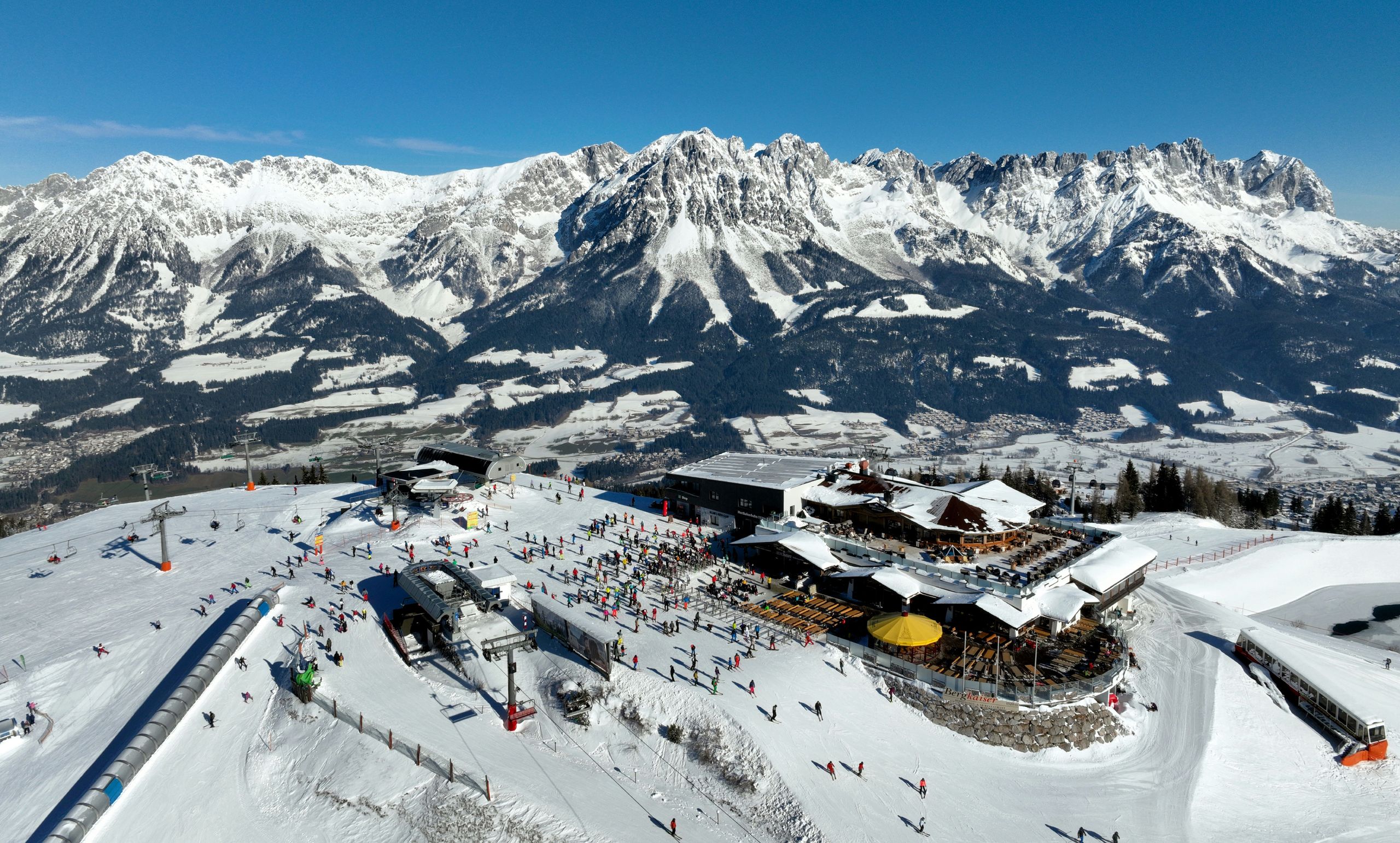
As mentioned earlier, this area is of particular interest, as two cultures coexist in the same place, creating a completely unique picture. Indeed, although Gistchberg-Jochtal is situated in Italy, it retains an Austrian-style culture in various respects, such as its food and architecture.
The Gitscherg-Jochtal area comprises eight different villages, the main ones being as follows:
- Vals / Valles: This is a small village that boasts direct access to the Jochtal ski slopes. Thanks to its ski-in/ski-out facilities and family-friendly amenities, it is the ideal choice for those travelling with young children.
- Meransen / Maranza: This resort is situated in a prime, sunny location, offering direct access to the Gitcshberg ski area, with many hotels boasting ‘ski-in/ski-out’ facilities.
- Muhlbach / Rio di Pusteria: This village is situated lower down in the valley, a short distance from the main road linking the various villages of Val Pusteria. Thanks to this very feature, it is well connected, making it easy to reach not only the ski slopes but also the other villages where visitors can try their hand at other activities.
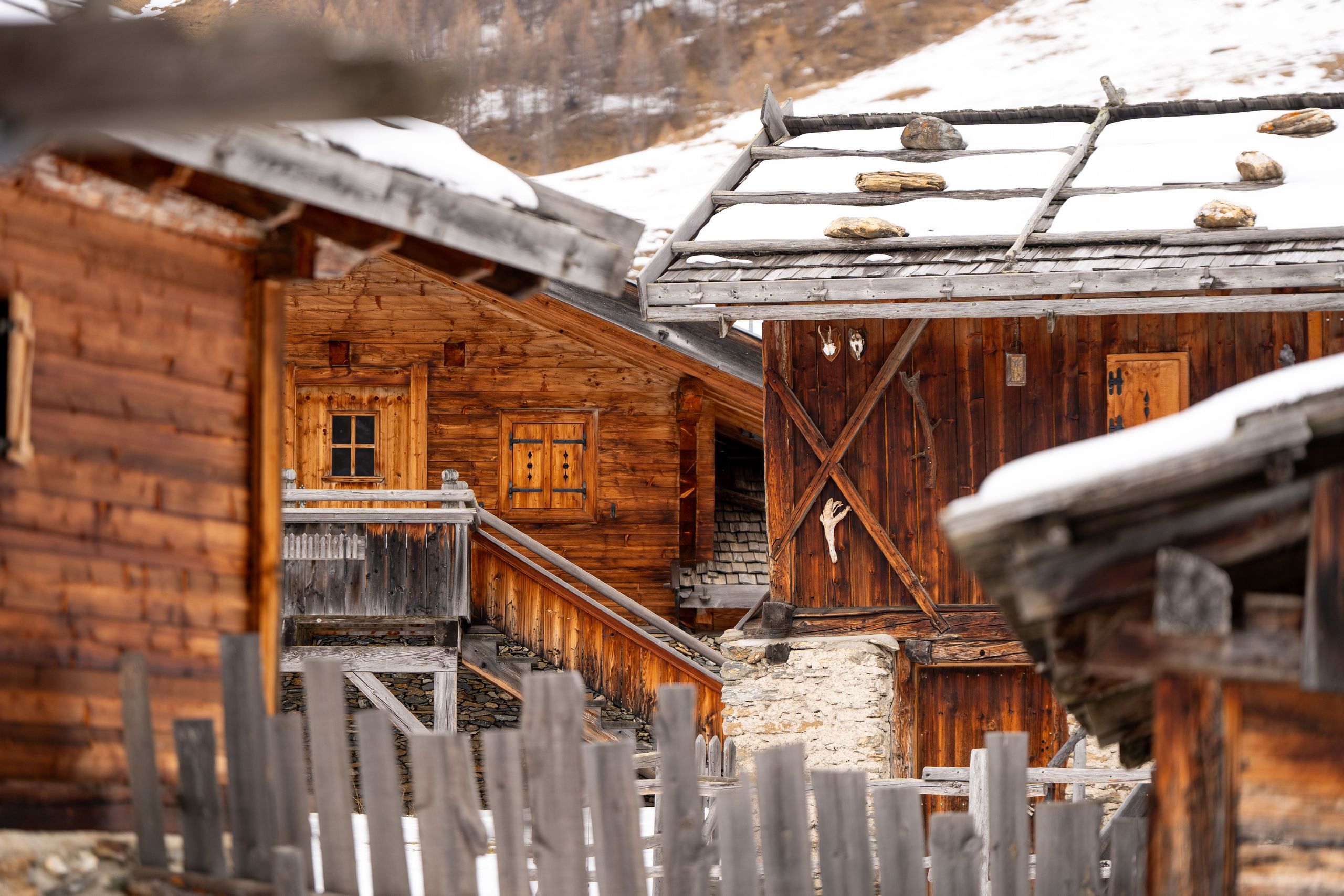
This area is steeped in local culture and tradition: indeed, it is inhabited mainly by shepherds and farmers, and daily life here is closely linked to nature and the mountains. This distinctive character is particularly evident in Fane Alm, a small village situated above Valles, consisting of traditional wooden huts, hay barns and a small church, all of which make it a charming place to visit.
About food
Food in the Gitschberg-Jochtal area is closely tied to the landscape. Here, eating is not simply about choosing between traditional dishes and modern cuisine; it is about experiencing the character of a mountain region where farming, altitude and South Tyrolean traditions continue to shape everyday life.
The local cuisine is hearty and uncomplicated, built around ingredients that have long been available in the surrounding farms and mountain pastures. Speck, Alpine cheeses, potatoes, bread, eggs, milk and seasonal vegetables appear frequently on local menus. These ingredients are transformed into dishes such as dumplings, filled pasta and savoury pastries, which are particularly satisfying after a day spent hiking or skiing.
One of the specialities worth looking for is Schlutzkrapfen, a type of filled pasta traditionally associated with South Tyrol. Dumplings, or Knödel, are another essential part of the regional repertoire. They can be prepared with Speck, cheese or other ingredients and are often served as a substantial main course rather than merely a side dish. Tirtlan, crisp fried pastries with savoury fillings, offer another taste of the area's traditional cooking. Desserts also have an important place in the local food culture. Apple strudel is an obvious favourite, while buckwheat-based cakes and other Alpine pastries provide alternatives for those looking for something distinctly regional. Kaiserschmarrn and similar warm, filling desserts are especially appealing after spending time outdoors in cooler weather.
The mountain huts around Gitschberg-Jochtal add another dimension to the culinary experience. Many are connected to working farms, so the distance between producer and plate can be remarkably short. Homemade cheese, butter, milk, eggs, jams and cured meats are among the products visitors may encounter. Eating at a hut therefore provides more than a convenient lunch during a mountain excursion: it offers an opportunity to taste food that reflects the agricultural life of the surrounding valleys.
At the same time, the cuisine of Gitschberg-Jochtal is not frozen in the past. Restaurants and hotels increasingly combine traditional South Tyrolean ingredients with Italian and Mediterranean ideas. The result can be lighter and more contemporary than the food served in a mountain hut, while still retaining a strong connection to the local landscape.
For visitors, the best approach is to try both sides of the region's culinary identity. Seek out traditional dishes and farm-produced ingredients, but also explore the restaurants where local flavours are interpreted in a more contemporary way. Together, they reveal why food is such an integral part of the Gitschberg-Jochtal experience.
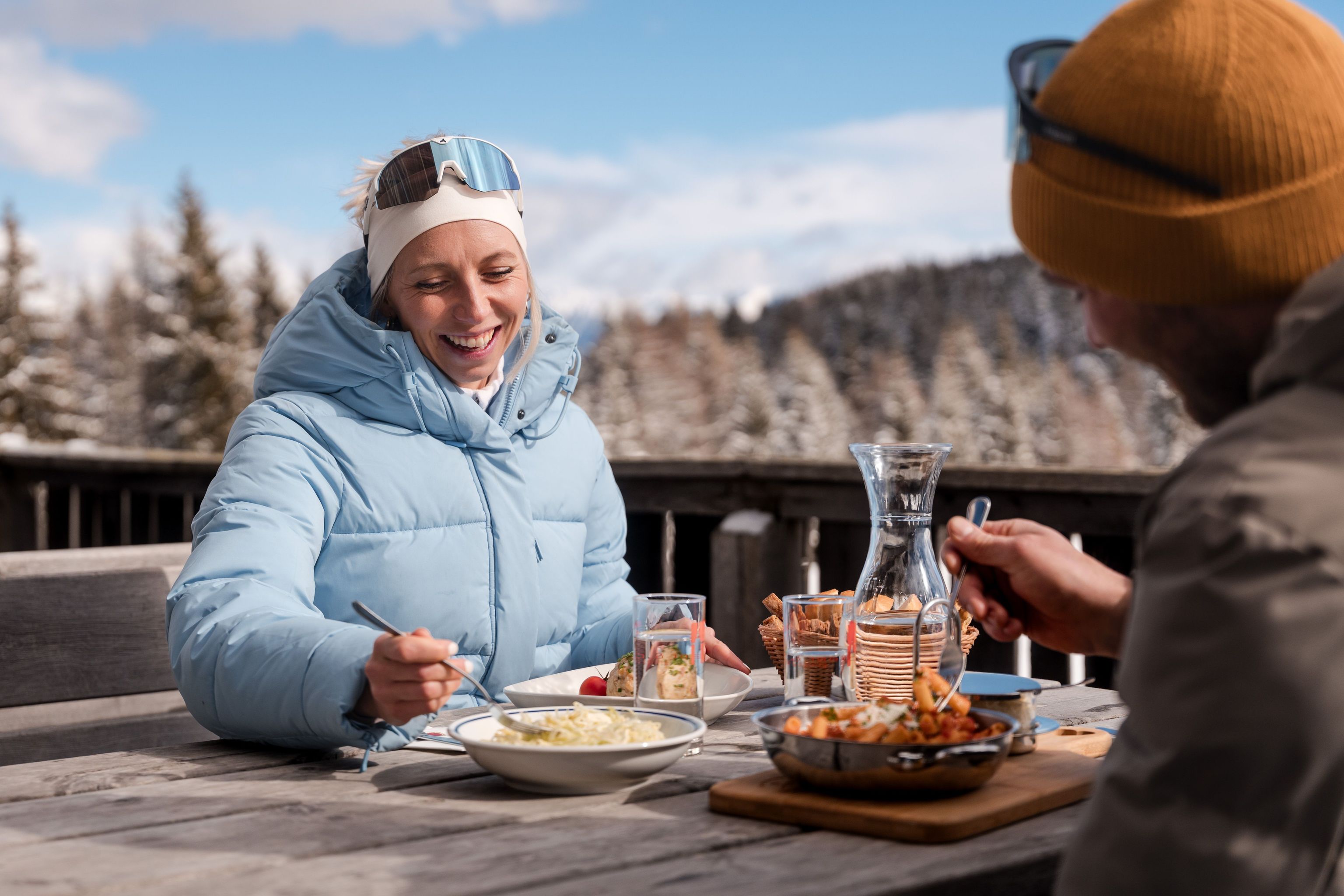
Photo credits to the Gitschberg-Jochtal Tourist Board